Bringing a baby into the world asks an enormous amount of the body, and the pelvic floor often carries more of that load than new mothers realise. In the weeks and months after birth, it is common to notice bladder leaks with a cough or a sneeze, a heavy or dragging feeling in the pelvis, ongoing pelvic pain, or a core that simply does not feel like it used to. These experiences are common, but common does not mean they should be ignored or accepted as permanent. With the right assessment and a structured approach to movement, most women can rebuild pelvic floor strength and function well beyond what they might expect in those first exhausting months.
Understanding the Postpartum Pelvic Floor
The pelvic floor is a group of muscles that stretch like a hammock from the pubic bone to the tailbone, supporting the bladder, bowel and uterus while also playing a key role in core stability. Pregnancy and birth, whether vaginal or caesarean, place significant demand on these muscles. Hormonal changes soften connective tissue in preparation for birth, the growing uterus adds sustained load over many months, and the birth itself, particularly a vaginal delivery, can stretch or strain the pelvic floor considerably.
The result can be a pelvic floor that is either weaker than before, or in some cases overly tight and guarded in response to pain or trauma. Both patterns can lead to symptoms such as urinary or bowel leakage, a sense of heaviness or bulging, pain during intercourse, or pelvic pain that seems to have no obvious cause. None of these symptoms is something to simply push through, and all of them are the kind of thing a women’s health physio is specifically trained to assess and treat.
Why a Pelvic Floor Physiotherapy Assessment Comes First
Every postpartum body is different, which is exactly why a generic exercise plan rarely gets the best results. A thorough pelvic floor physiotherapy assessment looks at how the pelvic floor is functioning, not just whether symptoms are present. This typically includes understanding your birth history, current symptoms, and how your core and pelvic floor are coordinating with everyday movement such as lifting, coughing or standing from a chair.
This assessment matters because the right starting point is different for every woman. Some need to focus on gently reconnecting with and relaxing an overactive pelvic floor before any strengthening work begins. Others need a structured, progressive strengthening program from the outset. Without this individual picture, it is easy to either overdo return-to-exercise too soon or hold back longer than necessary out of uncertainty.
How Clinical Pilates Supports Pelvic Floor Recovery
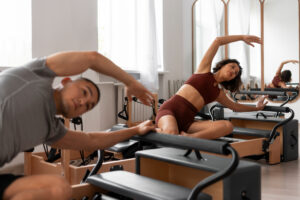
Clinical Pilates is often recommended alongside pelvic floor physiotherapy because it shares the same underlying philosophy: controlled, precise movement built on core and pelvic floor coordination. Unlike a general Pilates class, Clinical Pilates sessions are guided by a practitioner who tailors exercises to your specific assessment findings and adjusts them as your body changes week to week.
In a postpartum context, this often means starting with fundamental breathing and gentle activation patterns that reconnect the deep core and pelvic floor, before progressing toward more functional movements that mirror daily life, from picking up a toddler to returning to a favourite form of exercise. The equipment used in Clinical Pilates, such as the reformer, allows resistance and support to be finely adjusted, which is particularly valuable when a body is rebuilding capacity rather than starting from a blank slate.
This graded approach is one of the main reasons Clinical Pilates works well for postpartum recovery. Loading the pelvic floor and core too quickly can aggravate symptoms, while avoiding load altogether can leave muscles under-conditioned. A well-designed program sits in the middle, increasing demand at a pace matched to what your body is ready for.
Common Pelvic Pain Patterns After Birth
Diastasis recti, or abdominal separation, which can affect core support and is often assessed alongside pelvic floor function rather than in isolation.
Coccyx or tailbone pain, particularly after a longer or more difficult vaginal birth.
Scar-related discomfort around a caesarean or perineal scar, which can sometimes contribute to broader pelvic tension.
Lower back pain that persists after birth, which is frequently linked to how well the deep core and pelvic floor are working together rather than being a back problem in isolation.
Pelvic Floor Health Beyond Postpartum: Looking Toward Menopause
Postpartum recovery is not the only life stage where the pelvic floor needs attention. As oestrogen levels decline through perimenopause and menopause, pelvic floor and connective tissue can change again, sometimes bringing back symptoms similar to those experienced after birth, such as urgency, leakage or pelvic heaviness, even in women who recovered well after having children.
This is why an ongoing relationship with a women’s health physio can be valuable well beyond the newborn stage. The pelvic floor is not a problem to solve once and forget; it is a system that benefits from periodic attention at different life stages, and the strategies learned during postpartum recovery, from breathing patterns to Clinical Pilates progressions, often translate directly into managing pelvic floor changes at menopause.
What a Session Looks Like at All About Movement
At our Newmarket clinic, women’s health physiotherapy and Clinical Pilates are designed to work together rather than as separate, disconnected services. A pelvic floor assessment forms the starting point, giving both you and your practitioner a clear picture of where things stand. From there, treatment might combine hands-on physiotherapy techniques with a tailored Clinical Pilates program, so that what is learned in an individual assessment carries directly into your ongoing movement and strengthening sessions.
Our practitioners take the time to explain what is happening and why, so that recovery feels like something you understand and are actively part of, rather than a set of exercises handed to you without context. Many women describe finally feeling like their symptoms are being taken seriously, often after having been told for months that leaking or pelvic pain is simply a normal part of having had a baby.
When to Book a Pelvic Floor Physiotherapy Assessment
There is no need to wait for symptoms to become severe, or for a set number of weeks to pass, before seeking support. Many women benefit from an initial pelvic floor check from around six weeks postpartum, once cleared by their GP or obstetrician, though it is never too late to seek an assessment, whether it has been six months or several years since birth. If you are experiencing pelvic pain, bladder or bowel symptoms, or simply want guidance on returning to exercise with confidence, a women’s health physio assessment is the clearest first step.
Recovery after birth is rarely linear, and it does not need to be navigated alone. With the right assessment and a Clinical Pilates program built around your specific needs, most women can move toward a stronger, more comfortable pelvic floor, whatever stage of postpartum recovery, or life, they happen to be in.