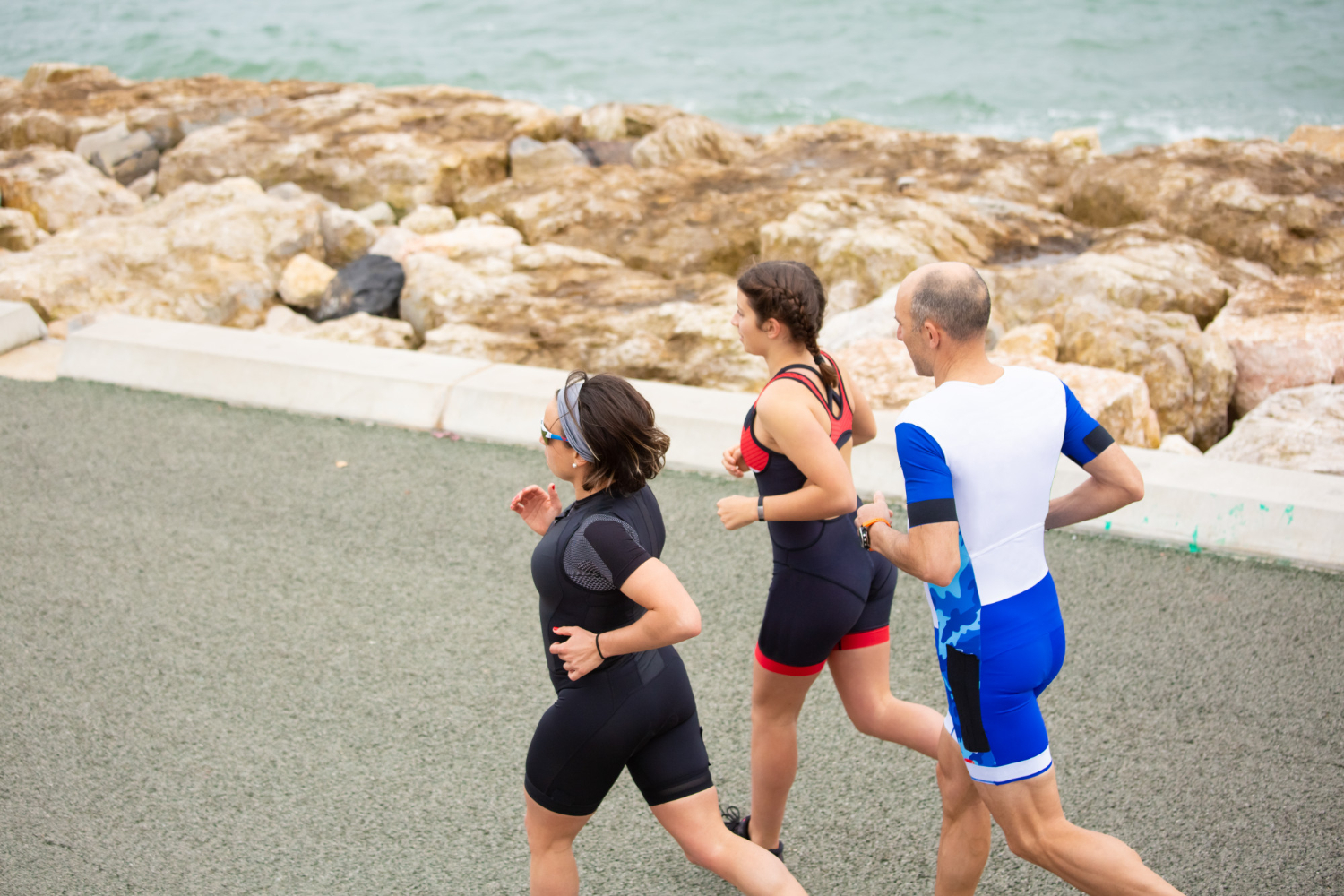
Training for a marathon asks a lot from the body. It demands consistency, patience, resilience, and the ability to keep moving well through weeks and months of increasing load. For many runners, the focus stays on mileage, pacing, shoes, strength work, and race goals. These all matter. But one area that is often overlooked is how the body is actually coping through each phase of the running journey.
This is where osteopathy for marathon runners can play an important role.
At All About Movement, we see osteopathy as more than a treatment option for pain. It can be a valuable part of the full marathon process, from preparation and training support to race week management and post marathon recovery. Rather than waiting until something goes wrong, many runners benefit from osteopathy for runners to better understand their movement, improve recovery, and manage the physical demands of long-distance running.
Whether you are preparing for your first event, chasing a personal best, or returning to running after time away, the right support can help you stay on track and feel more confident in your body.
Marathon training places repeated stress on the body
Running is simple in theory, but physically it is repetitive and demanding. Marathon preparation often involves multiple runs each week, longer sessions on tired legs, speed or tempo work, and a steady increase in training load. Even when your program is well planned, the body still needs to absorb and adapt to that stress.
Common areas that can become overloaded during marathon training include the calves, Achilles tendon, knees, hips, lower back, feet, and hamstrings. Some runners also notice tightness through the upper back, reduced hip mobility, or fatigue related changes in running form as mileage builds.
Not every ache means injury. At the same time, not every issue should be ignored.
One of the strengths of osteopathy is that it looks at the body as a whole. Instead of focusing only on the painful area, an osteopath assesses how different parts of the body are moving and working together. This can be especially useful for runners, where one restriction or weakness can affect stride efficiency, load distribution, and recovery.
Before race day: how osteopathy supports marathon preparation
Many people think of care only once pain has already set in. But for runners, early support can be just as valuable.
In the lead up to a marathon, osteopathy for runners can help identify movement restrictions, muscle imbalances, training-related tightness, and areas that may be under more stress than they should be. This does not mean every runner needs constant treatment. It means that having the body assessed during training can help pick up issues before they become bigger setbacks.
For many athletes, this early support is also an important part of running injury prevention, especially during periods of higher mileage, speed work, or race specific training.
1. Movement assessment and running related strain
Marathon training is repetitive. If your hips are not moving well, your calves are overloaded, or your trunk control is lacking, those patterns can repeat thousands of times across a training block. Over time, this can contribute to pain, reduced efficiency, and slower recovery.
An osteopath for marathon runners can assess:
- joint mobility
- muscle tension and load tolerance
- control through the hips and trunk
- how past injuries may be affecting current movement
- areas of compensation that may increase strain during running
This can be useful whether you are already symptomatic or simply want to manage your body better through higher mileage.
2. Supporting training consistency
One of the biggest goals in marathon preparation is consistency. Missing one run is usually not the problem. Repeated interruptions from soreness, poor recovery, or niggles that keep returning can make it harder to build momentum.
Osteopathy may support consistency by helping runners manage tightness, restore comfortable movement, and understand what their body needs as training changes. If something feels off, having it assessed early may help prevent a minor issue from disrupting the rest of the block.
3. Helping runners understand the difference between fatigue and injury
Marathon runners often push through discomfort because they assume it is part of training. Sometimes it is. Sometimes it is the body signalling that a certain area is not coping well with the current load.
An osteopath can help runners better understand this difference. That clarity matters. It can help you decide when to continue, when to modify, and when to address a problem before it escalates.
Osteopathy during a marathon training block
As race day gets closer, training usually becomes more specific and more demanding. Long runs get longer, pace work becomes more focused, and recovery starts to matter even more. This middle phase of training is often when runners notice the buildup of fatigue.
This is also where osteopathy for marathon training can be useful as part of broader support.
Managing common marathon training issues
Some of the more common problems runners experience through marathon preparation include:
- calf tightness
- Achilles irritation
- plantar fascia discomfort
- knee pain
- hip tightness
- hamstring tension
- lower back stiffness
- glute fatigue
- reduced stride comfort after longer runs
These issues do not always mean you need to stop training. Often, the right approach involves assessing the cause, managing the irritated area, and making practical changes to support continued progress. This is where osteopathy for marathon runners can be especially valuable, helping runners stay proactive rather than reactive during demanding training blocks.
At All About Movement, osteopathy is not about telling runners to stop unless it is truly necessary. It is about understanding the issue and helping you make sensible decisions that support both your body and your goals.
Keeping the body moving well
As fatigue builds, movement can become less efficient. Joints may feel stiffer, tissues may become more sensitive, and normal recovery strategies may not feel enough. Osteopathy may help by addressing mobility restrictions, reducing excessive tension, and supporting more comfortable movement between sessions.
For runners, this can mean feeling less restricted through the hips, calves, back, or feet, especially during heavy phases of training.
A whole body perspective
Running injuries are not always caused by the place that hurts. Knee pain, for example, may involve hip control, ankle mobility, or changes in training load. Calf tightness may be linked to foot mechanics, stride changes, or accumulated fatigue from speed work.
This is why a whole body approach can be helpful. Osteopathy for runners looks beyond the immediate symptom and considers the broader movement picture. This approach can also support running injury prevention by identifying movement issues early and helping runners make changes before pain becomes a bigger setback.
Race week: support before marathon day
Race week brings a different challenge. By this point, the hard work is largely done, but many runners feel physically tight, mentally tense, or uncertain about how their body will perform on the day.
The goal during race week is not to make major changes. It is to support confidence, maintain comfortable movement, and avoid doing anything that creates unnecessary soreness.
An osteopath may help during race week by:
- checking in on any lingering areas of tightness
- helping the body feel more mobile and comfortable
- supporting pre-race confidence
- guiding runners on what feels manageable versus what needs more caution
- Reinforcing recovery and movement strategies before the event
At this stage, care should be appropriate to timing and training status. The aim is not to overload the body with treatment. It is to support readiness.
On race day: why osteopathy still matters
While osteopathy is not something you do during the race itself, the benefits of good preparation can carry into race day.
When your body is moving better, recovering better, and being managed proactively, you may start the event feeling more confident and less reactive to the small issues that can otherwise throw off your performance. Marathon day is still demanding, and no treatment can remove every challenge, but preparation matters.
Runners who have used osteopathy as part of their lead-up often value:
- better awareness of their body
- more confidence in managing pre-existing niggles
- a clearer understanding of what sensations are expected
- reassurance around pacing their effort if certain areas feel vulnerable
- improved trust in their movement
Race day is not just about performance. It is also about staying calm, adapting well, and finishing as strongly as possible based on your training.
After race day: osteopathy and marathon recovery
The marathon may be over in a day, but the body often feels its effects for much longer. Even a well-prepared runner can finish with soreness, tightness, joint stiffness, or fatigue that lingers well beyond the event itself.
This is where post marathon recovery becomes important.
What runners often feel after a marathon
After race day, it is common to experience:
- calf and quad soreness
- stiffness in the hips or lower back
- foot and ankle discomfort
- reduced range of movement
- fatigue-related tension throughout the body
- flare-ups of pre-existing weak points
Recovery is not only about rest. It is also about helping the body return to normal movement, settle overloaded tissues, and gradually rebuild capacity for future training.
How osteopathy can support recovery
Osteopathy after a marathon may help runners by supporting comfortable movement, addressing areas of tightness or overload, and helping them transition into recovery more smoothly. It can also be useful for identifying issues that became obvious during the event but may have been building for weeks beforehand.
For example, if you noticed ongoing hip pain from the twenty-kilometre mark onward, or strong calf tightness that affected your stride late in the race, post-race assessment can help identify what contributed and what to work on before your next event.
This matters whether your goal is to recover well, return to casual running, or prepare for another race later in the season. A tailored approach to recovery for runners can make it easier to restore movement, reduce lingering soreness, and return to training with confidence.
Osteopathy is not just for injury treatment
One of the biggest misconceptions about osteopathy is that it is only relevant once something has gone wrong. For marathon runners, it can be much broader than that.
At All About Movement, we see osteopathy for marathon runners as part of a complete support system that may help runners:
- understand their body better
- manage training-related stress
- improve comfort through higher mileage
- address early warning signs before they worsen
- recover more effectively after big efforts
- support recovery for runners after major events
- assist with running injury prevention across the full training cycle
- return to training with more confidence
That does not mean osteopathy replaces good coaching, proper programming, nutrition, sleep, strength work, or sensible progression. It works best alongside these things. It adds another layer of support that helps runners respond earlier and move more confidently through each phase of training.
A practical approach for runners at All About Movement
Every runner is different. Some are building toward their first marathon and want support staying consistent. Others are experienced runners trying to manage recurring tightness or improve recovery between harder sessions. Some come in with pain. Others simply want to feel more prepared and less reactive as training load increases.
At All About Movement, our approach is built around understanding your movement, your running background, and your goals. That means looking at what is happening now, what your body has been through, and what you need to keep moving forward.
For runners, that can include:
- assessment of current concerns
- hands-on treatment where appropriate
- guidance around load and recovery
- support before major race events
- post-race follow-up for recovery and planning
Why does the Newmarket location work well for marathon runners?
For runners training around Anytime Fitness Newmarket, the local area also offers useful places that can support the wider marathon journey. Having access to a gym is important, but many runners also benefit from nearby spaces where they can recover, reset mentally, and stay consistent with the habits that support long-distance training.
With Anytime Fitness located at Newmarket Village in Newmarket, Queensland, runners have access to a convenient base for strength work, mobility sessions, and lower-impact training alongside their running program. That kind of accessibility can make a real difference during a marathon block, especially when time, energy, and recovery all need to be managed carefully.
Newmarket also offers practical local support around training. Newmarket Village provides everyday essentials, dining options, and services in one place, which can be helpful before or after sessions when runners are trying to stay organised with food, hydration, and routine.
For runners looking to add variety to their routine, Newmarket Pool is another useful local option. Brisbane City Council lists the facility as having 25 metre and 50 metre outdoor pools, an indoor programs pool, and a fitness centre. For some runners, that creates another way to include recovery-based movement or low-impact conditioning during heavier phases of training.
This kind of local setup can make marathon preparation feel more manageable. When strength work, recovery options, and practical day-to-day support are all close by, it becomes easier to stay consistent through the physical demands of training.
Supporting your full marathon journey
Marathon running is not just about race day. It is about the months of preparation behind it and the recovery that follows. The more support you have across that whole journey, the better placed you are to train consistently, respond to setbacks early, and enjoy the process more.
Osteopathy for marathon runners can play a valuable role before, during, and after race day. Not just when you are injured, but as part of staying aware of how your body is coping and what it needs next. From running injury prevention during training to post marathon recovery after the event, osteopathy can be a practical part of the wider support system that keeps runners moving well. If you are preparing for a marathon, managing pain during training, or looking for better recovery for runners after race day, All About Movement can support your running journey with a practical, personalised approach.